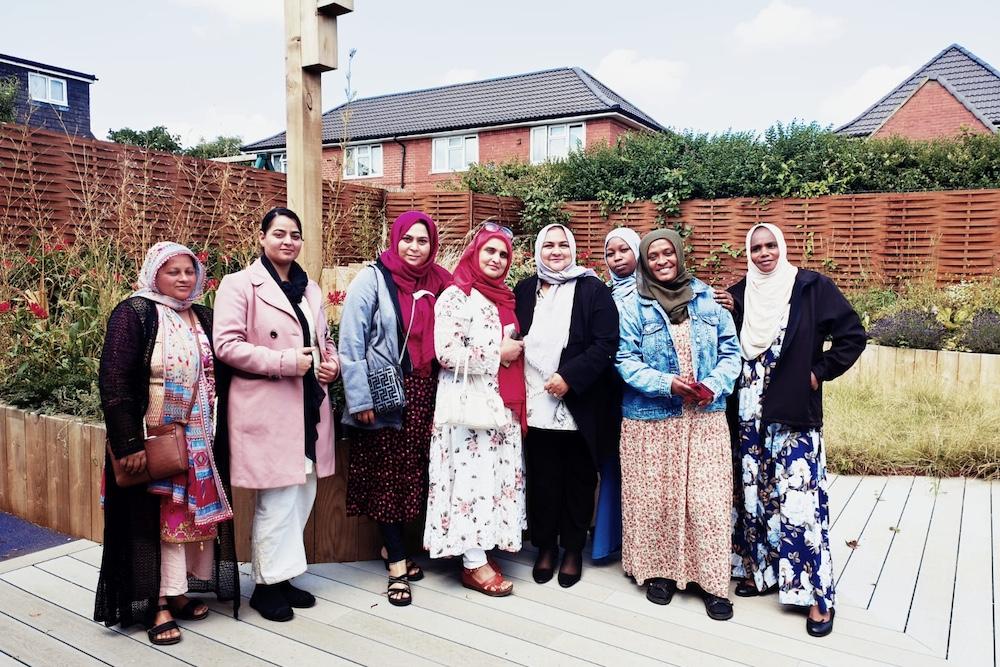
Project aims to further develop the work researched with the women of Braunstone, that culminated in a short “work in progress” ‘The Mothers of Braunstone’, which took place during the ‘Being Human Festival’ at DMU. This work in progress was co-created by the women of the area and was very well received by a diverse audience of locals, theatre professionals and DMU staff and students. The MP for Leicester East also visited during rehearsals and has noted the importance of the project for the city.
Leicester is the second most ethnically diverse city in the UK, just behind London. In the times that we currently live in, community relations and building trust are more important than ever. The area of Braunstone struggles as a community with economic marginalisation and all the associated taboos, and stigmatisation of being identified as a ‘far right’ estate. The project aims to explore positive response to new multicultural communities that are thriving in Braunstone and plot and investigate how this was achieved. It will show how the women opposed their own families, partners, and communities to accept and build an inclusive community based upon including new immigrants from Somalia, Palestine, Iraq and Sudan, all places deeply scarred by conflict. This has helped to challenge the stigma attached to the community that is often identified as ‘Far Right’, white, working-class estate (which Is seen by right-wing parties and groups seeking to divide communities as ripe for exploitation).
We are working with Jeremy Weller, an External Associate of the Institute of Global Challenges and Cultures, who is one of the world leading experts and practitioners on social inclusion drama. We will be developing a much larger bid and project with DMU and ‘B inspired Braunstone Community Hub’.
Jeremy Weller’s process is key to our project as he is considered by many to be a world expert in Social Engagement through the arts. He has worked in Kosova, Brazil, USA, Portugal, Australia, Gaza, Denmark, where he partnered and collaborated from deep within communities and with individuals who were often marginalised and facing multiple challenges in their lives. In these communities he has developed immersive projects and performances that told their stories with their own voices as they lead on the performances. These projects both increased feelings of wellbeing and health in the participants and highlighted the complex challenges that these communities and individuals face, which fostered empathy and understanding in audiences.


Leave a comment